SKG+How do you turn a studio's chaotic content backend into a launchable presence — and persuade the founder that restraint serves the work?
SKG+ is an immersive entertainment studio in mainland China. As contract Web Designer (remote, Apr 2025–Apr 2026), I rebuilt skgplus.cn from a brittle Framer back-end into a CMS-driven showroom — and shipped a parallel competition platform amacontest.com under a 3-week emergency timeline that drew 400+ teams from across Asia.
The Challenge
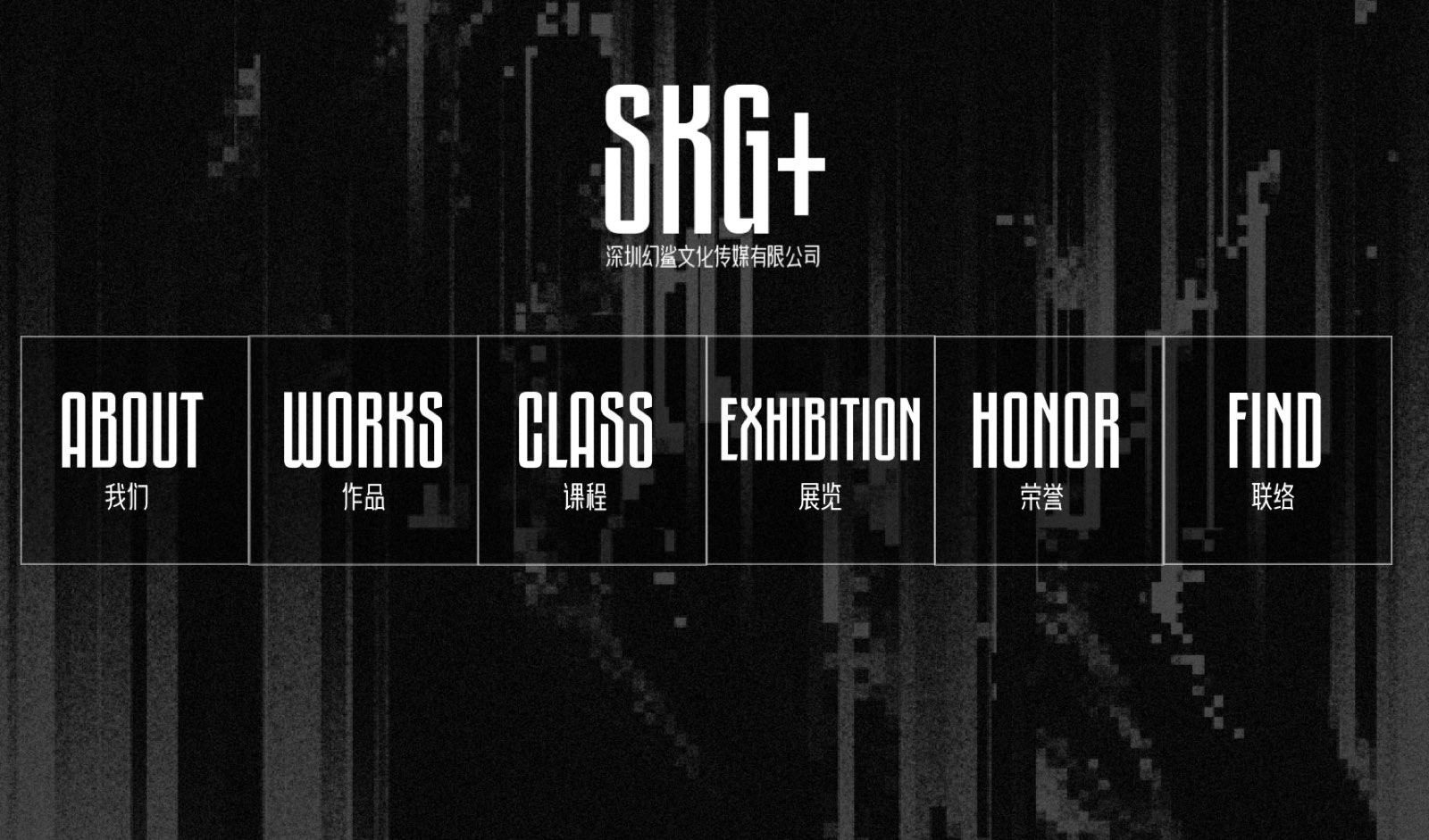
The studio's existing Framer back-end was breaking under maintenance — 170+ works were unmanageable to update. The founder asked for a 'fancy, color-matched' hero. But the studio's source work was already saturated, vivid, dense — adding visual density on top would create fatigue. And mid-project, an emergency: a 3-week window to launch amacontest.com (Asia Mapping Art Contest) with no extension.
Research & Discovery
I sat directly with the CEO and the principal creators to map their content workflow. Two findings drove everything that followed:
- The Framer back-end was the real bottleneck — content updates broke layouts every release.
- The founder's 'fancy' brief was a hypothesis, not a spec. What he actually meant was 'don't look generic.' Restraint, not maximalism, was the right answer once we held up examples of peer immersive studios.
Design Strategy
Three decisions shaped the build:
- Restraint as service. The studio's work IS the color; the web should be the frame. After comparing color-saturated mockups side-by-side against a near-monochrome scaffold, the team agreed.
- Pipeline before pages. Instead of manually uploading 170+ works to Framer, I built a Google Sheet → Make.com → Gumlet → Framer sync. Update one row in a sheet, the website refreshes.
- Reusable design system. Components and tokens were structured so the amacontest.com 3-week emergency could lift the entire visual language and ship a new site without re-designing primitives.
Implementation & Pipeline
I owned: brand visual, IA, interaction logic, deployment, ongoing content maintenance.
Pipeline stack:
- Content layer: Google Sheet (creators + content team can edit)
- Automation: Make.com scenarios trigger on sheet edits
- Video hosting: Gumlet (paid, optimized)
- Site: Framer (front-end)
- Sync: sheet → Make.com → Framer CMS API → live
This turned content updates from a designer-blocker into a 30-second self-serve action.
Results & Impact
- 170+ works officially listed and managed via the automation pipeline
- amacontest.com launched in 3 weeks (target was 4), drew 400+ teams from across Asia
- Founder approved the visual restraint direction post-launch — the first time the studio shipped without a 'more color' note
- Maintenance time per content drop dropped from ~10 minutes to ~30 seconds
Lessons Learned
Three things I'd carry forward:
- Founder briefs are hypotheses, not specs. 'Fancy + color-matched' decoded into 'don't look generic.' Restating the brief in user-facing terms saved a week of revisions.
- Pipelines compound. Building the Google Sheet ↔ Make.com sync early made the 3-week amacontest emergency feasible — the system already knew how to ship content.
- The hardest design choice was about what NOT to add. Reducing visual fatigue on the home page was harder to defend than adding more — but it earned more trust from the team than any addition.
What's Next
The home page currently lives as 'showreel + logo' for maintainability. If I redesigned it tomorrow, I'd build a layout that adapts dynamically to the work library — surfacing recent or featured pieces without manual curation. The information architecture for that already exists in the pipeline; only the front-end rendering needs to catch up.
Next brand evolution: the studio's visual language is shifting from local-traditional → international as it engages global competitions. Documenting that transition is the next deliverable.