Meta StationWill the metaverse be the future of online network and remote work?
A HUAWEI HarmonyOS theme that treats the lock screen as a small social place rather than a utility surface — designed during the UX internship at HUAWEI Co., Ltd in Chengdu.
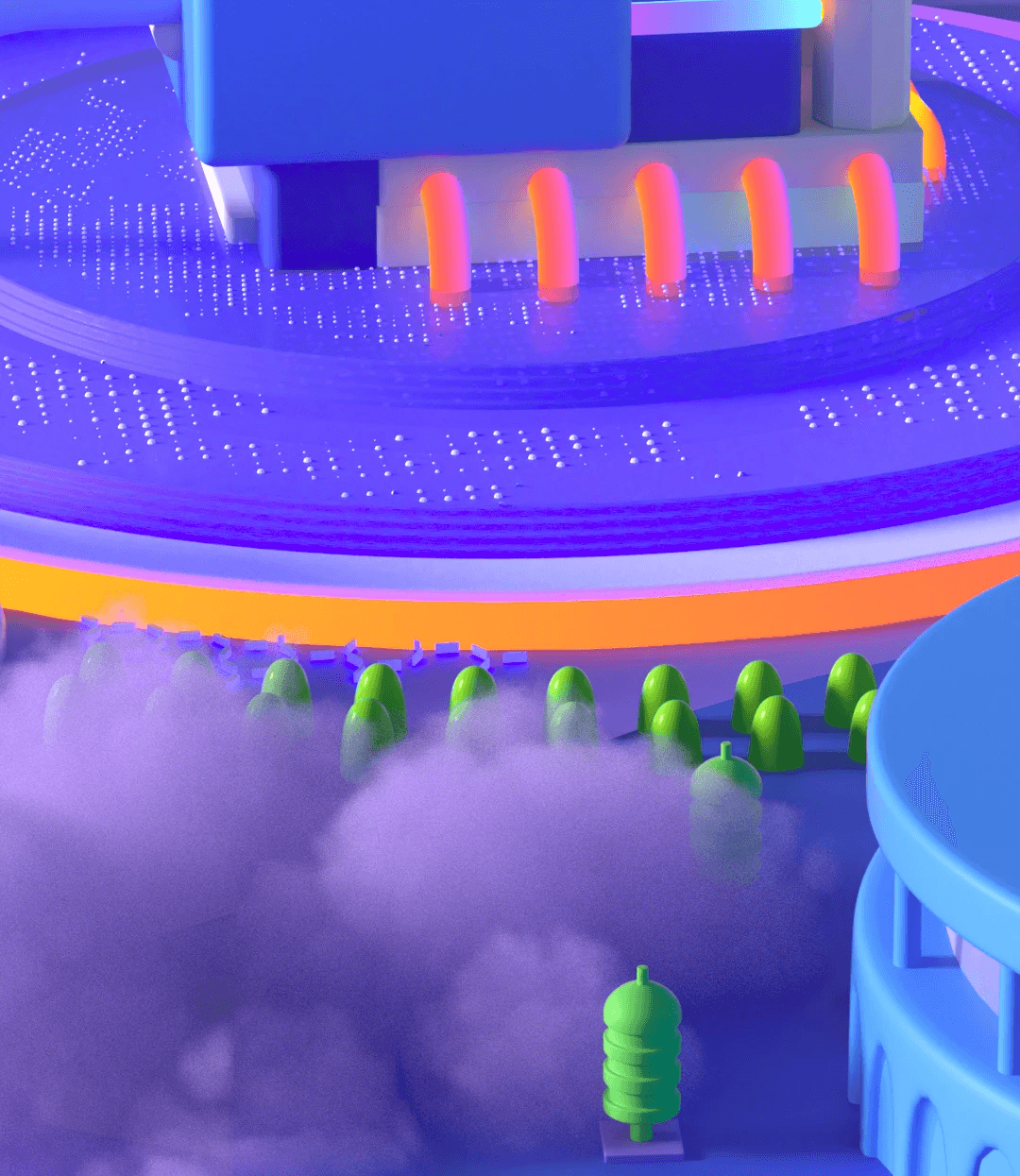
A HUAWEI HarmonyOS theme that treats the lock screen as a small social place rather than a utility surface. Day–night sensing, anecdote-pressing, and a lowpoly meta-city create a phone front-door that feels inhabited — mid-pandemic, when remote work made the boundary between online and offline porous.
The Challenge
When the pandemic made online socialisation and online office the default, mobile interfaces were still designed around tap-and-go utility. The brief: imagine a HarmonyOS theme where the phone surface itself feels like a lowpoly virtual social space — somewhere between a wallpaper, a desktop pet, and a metaverse outpost. Built for the era of the full-fledged Internet.
Research & Discovery
Style direction: 3D bright tone, virtual nostalgic, modernism, fashion style, future-of-the-past 80s–90s. Target age groups: 21–35-year-old hot-company employees and content seekers, the same fashion as the world.
Design philosophy borrowed from one internal note: 'Use the concept of meta-station to allow users to predict scenarios while navigating, creating fun in entertainment.'
Design Strategy
Three design commitments:
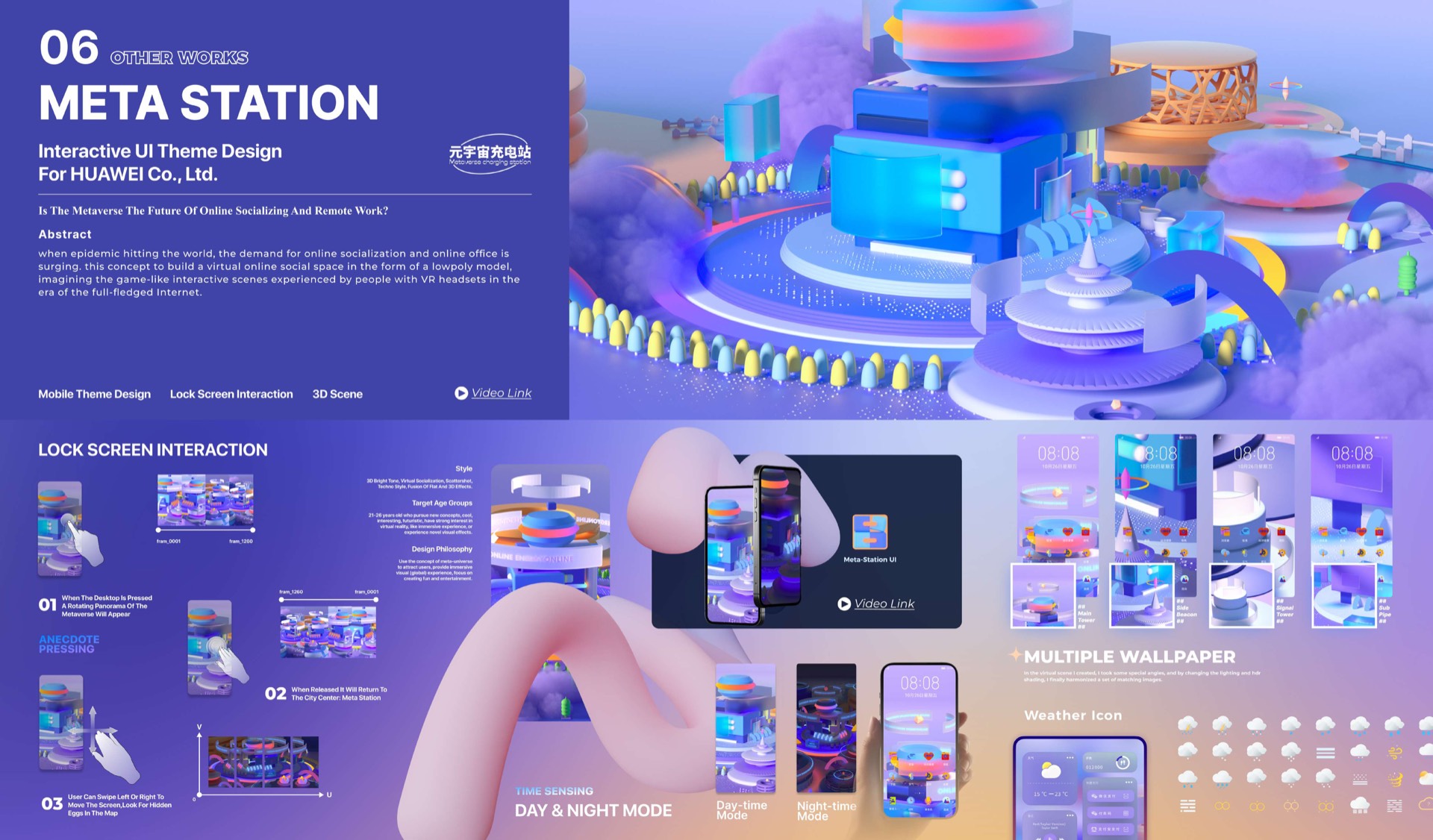
- The lock screen is the front door, not the doormat. Anecdote-pressing, swipe-left-or-right to look around, hidden eggs in the map.
- Day and night sensing. The same scene shifts colour, light, and mood based on time. Day-time mode and night-time mode share characters and city, not just a hue swap.
- Multiple wallpapers, single language. The wallpapers (city, desktop, weather widgets) sit inside the same lowpoly scene grammar so the theme feels like one place, not a folder of unrelated assets.
Implementation & Pipeline
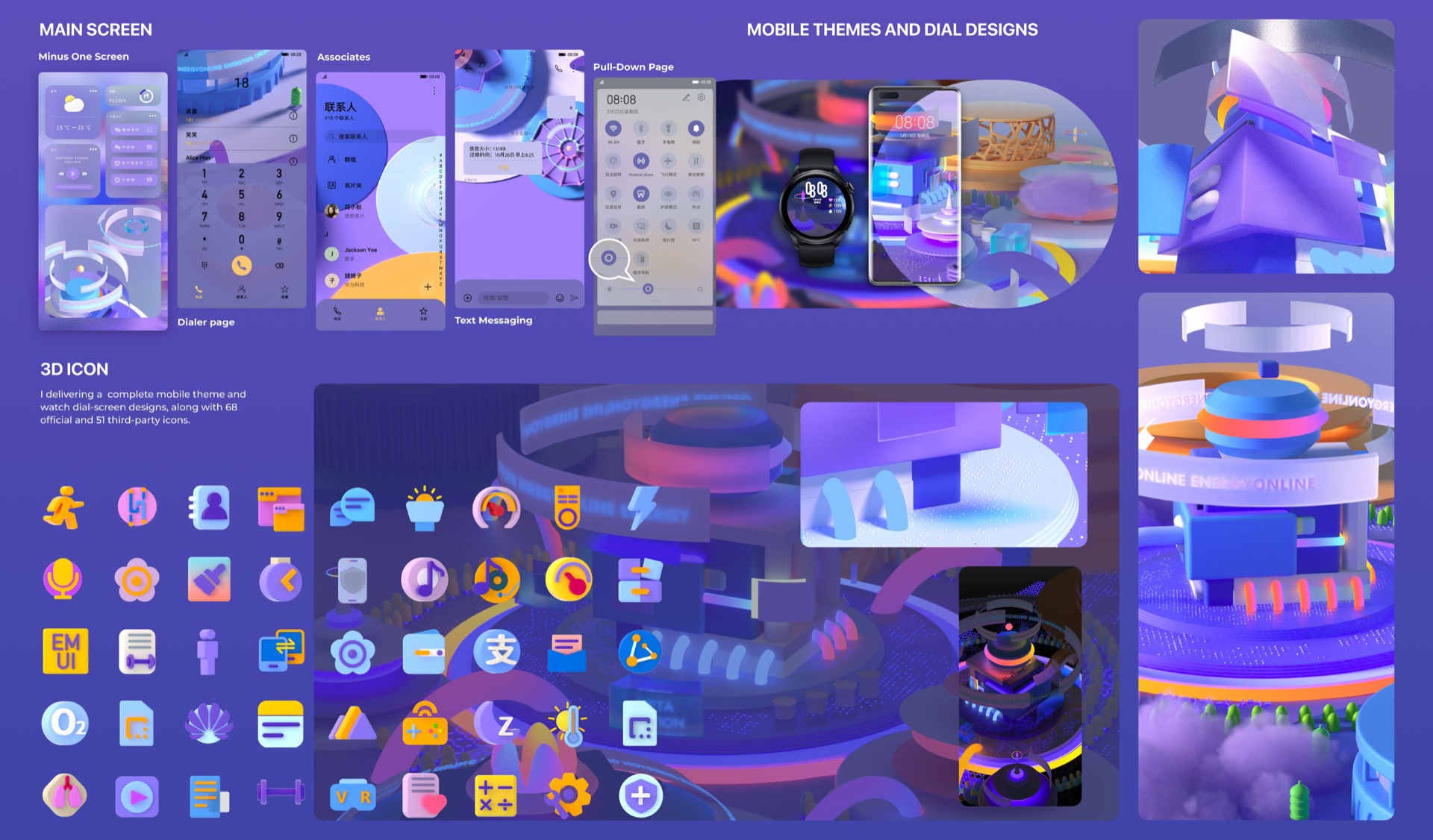
3D scene authoring + UI theme design + lockscreen interaction logic. Outputs: the meta-station 3D city environment, multiple wallpaper variants, day/night transition, and a weather-icon family for the theme's UI surfaces.
Lockscreen interaction sequence: 01 — When the desktop is pressed, a floating panorama of the meta-station appears. 02 — When released, the view returns to the city centre. Anecdote-pressing reveals scene details; the user can swipe left or right to move the scene's POV and look for hidden eggs in the map.
Results & Impact
A complete HUAWEI Theme product — UI theme + lockscreen interaction + 3D scene + day/night mode + multi-wallpaper system + weather-icon family. Shipped through HUAWEI Themes (Meta-Station UI).
Lessons Learned
Two carry-forwards:
- A theme is a tiny game world, not a skin. Once the lockscreen has anecdotes, swipeable POV, and hidden details, it stops being decoration and starts being a place users return to.
- Time as a design surface. Day/night isn't just a colour-palette switch — it's an opportunity to give the theme a life cycle that maps to the user's day.
What's Next
Bring the same scene-as-place pattern into other small-screen surfaces — Apple Watch faces, in-flight entertainment lockscreens, smart-fridge ambient displays. Anywhere a screen sits in a person's life for hours but is treated as a static surface.